In This Article
Fabric Decides Whether It Gets Worn Twice
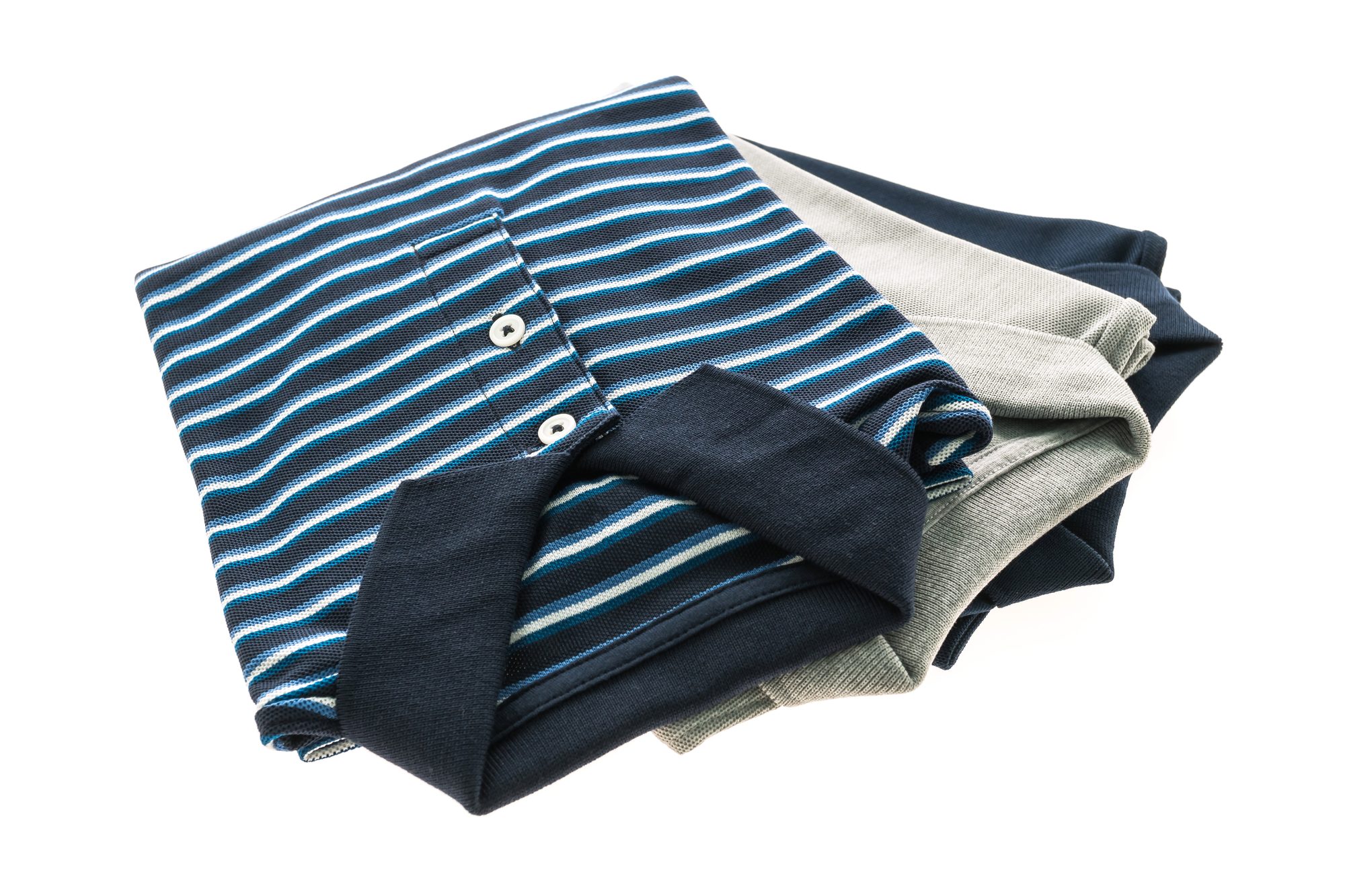
Cotton pique is the classic. It breathes, it feels substantial, and it wrinkles and shrinks. Good for lower-wear office use, less good for anyone who is moving.
Performance polyester blends wick moisture, hold their shape and resist wrinkling. They are the right answer for field staff, golf events, warm climates and anybody wearing the same garment through a long day. They can look slightly athletic, which suits some brands and not others.
Cotton-poly blends split the difference and are the safe default for a mixed workforce. Heavier weights read as more premium and last longer, which matters when the same garment is worn weekly for two years.
Fit Is Not a Detail
Every polo worth putting in a program comes in men’s and women’s cuts. A women’s polo is not a smaller men’s polo. It is shaped differently through the shoulder, chest and waist, and the placket and collar are usually scaled down.
Offering only unisex sizing is the most common quiet failure in company apparel. Nobody complains. They simply stop wearing it, and the spend is wasted. Range matters too, because a program that runs out at either end of the size curve excludes people by accident.
Embroidery or Screen Printing
Embroidery is the standard for polos. It looks premium, it survives washing better than print, and it reads as considered rather than promotional. It is done from a digitized stitch file, which is created from your logo, proven out on a sewn sample and then used on every garment.
Screen printing suits large designs, bright multi-color artwork and lighter fabrics, and it is more economical at volume for big prints. On a polo it is usually the wrong choice unless the design is large by intent.
Fine detail and very small text are where logos struggle in embroidery. That is a conversation worth having before the portfolio is approved rather than after three hundred garments have shipped.
Name Brand or Private Label
Consumer brands carry recognition, and recognition drives whether people wear a garment by choice. That is worth paying for on client-facing and executive roles.
Premium private label gives comparable construction without the consumer brand premium. Across several hundred employees that difference is where a budget actually goes, and once your mark is on the chest most people cannot tell.
Most sensible programs mix both, tiered by role. See brand partners for how we build a portfolio.
How Ordering Should Work
The traditional model is a wholesale bulk buy: estimate sizes, order a few hundred, store them, hand them out, reorder the sizes you got wrong. It looks cheap per unit and costs more than it looks.
The alternative is an online company store where each employee orders their own polo in their own size, it is decorated after the order is placed, and it ships to them individually. No inventory, no size collection, no leftover stock after a rebrand, and no minimum order size.
More on that under online company stores.
Where Polos Sit in a Wider Portfolio
Polos are rarely the whole program, and treating them that way is how portfolios end up thin.
Most businesses pair them with woven dress shirts for client-facing staff, quarter-zips and soft-shell jackets for outerwear, knit sweaters and fleece for colder locations, t-shirts for events and warehouse work, industrial work shirts and high-visibility clothing for field crews, and embroidered caps, beanies, computer bags and duffels to round it out.
Building the polo selection alongside those other products matters because the branding has to hold across all of them. Approved stitch files, one set of brand colors, one logo position standard, applied identically to a cotton pique polo, a fleece vest and a structured cap.
Common Questions
With a made-to-order program, none. There are no minimum order size, and garments are produced after they are ordered.
Embroidery, in most cases. It wears better and looks more considered. Screen printing makes sense for large or multi-color designs.
Yes, across the portfolio rather than on a few items. Men’s and women’s fits are available on everything we put in a program.
Yes, and most programs do, usually tiered by role. Decoration is done in house from approved stitch files, so your logo looks identical across all of them.
Most do. Very fine detail and very small text are where logos struggle, and we tell you that before the portfolio is approved rather than after.
Build a Polo Portfolio That Gets Worn
Tell us your company name, roughly how many employees you have, and which roles need covering. Our team will follow up.

- Men’s, Women’s and Unisex Shirts: What Actually Differs and Why It Matters - September 18, 2026
- Ordering Custom Polo Shirts for a Company Program: A Buyer’s Guide - September 18, 2026
- Keeping a Brand Visible When Most of Your Team Works Remotely - September 18, 2026