
Corporate Apparel for Restoration and Home Services Companies
Your crews arrive at a stranger’s house on the worst day that house has had. What they are wearing is the first evidence the homeowner has that they called a real company. A managed apparel program keeps every crew looking that way without anyone at the office running a supply closet.
Trust from the driveway
Crews that look like a company with systems.
Workwear built for the job
Durable labels for field crews.
Seasonal surges covered
New hires order in their first week.
Ships to each employee
Packed individually, within 5 to 7 business days.
The Apparel Is Doing Reputational Work Before Anyone Speaks
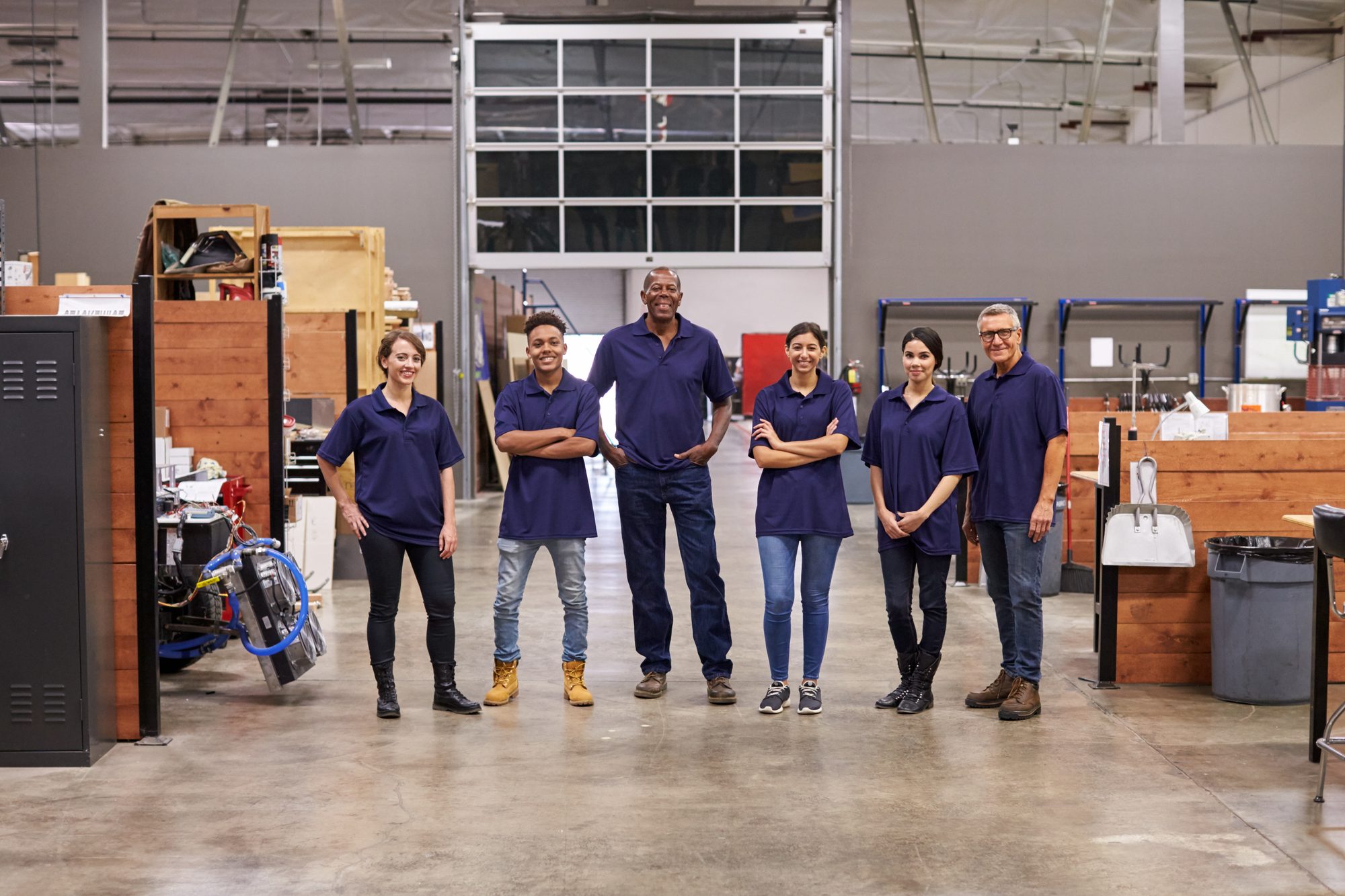
Restoration and remodeling sell on trust, and the trust decision is made in the first thirty seconds, from the driveway. A homeowner who has just had water through a ceiling, or who is letting a crew take their kitchen apart, is reading everything available: the truck, the paperwork, and what the people climbing out are wearing.
A crew in matched, clean, properly branded workwear reads as a company with systems. The same crew doing identical work in whatever they owned reads as three guys with a van, and that gap shows up in close rates, in review scores and in how often an adjuster recommends you again.
Nobody disputes this. What stops companies acting on it is that keeping thirty or eighty people in current, correctly sized apparel is genuinely annoying, and it always lands on somebody who has a real job already.
The context makes it harder than ordinary field service. Your crews arrive at a property during an emergency, often after fire or water damage, and the customer standing in the driveway is making a judgement about whether their home is in safe hands. Clothing that is clean, current and clearly branded is a small part of a difficult process, and it is one of the few parts you can control completely.
Why Bulk Ordering Breaks Fastest Here
Every industry has a version of this problem. In restoration and home services it is worse, for four reasons that compound.
Crew turnover is constant
An annual bulk order serves the people employed in January. Everyone hired across the other eleven months wears whatever is left in the wrong size, which is how a branded crew quietly stops being one.
The work destroys garments
Demolition, smoke, water and job site wear do not care what a shirt cost. Replacement is a normal monthly event, not an annual one, and bulk ordering has no answer for it.
Crews are rarely at the office
Apparel sitting in a cupboard at the shop is no use to a crew that goes straight from home to a job site. Somebody ends up driving shirts around, which is nobody’s actual job.
Weather changes what is needed
A program bought once a year is bought for one season. Crews working outdoors need layering and outerwear available when the weather turns, not when the purchase order renews.
Individual ordering answers all four at once. Each person orders their own size, the garment is made after the order is placed, and it ships to them. Corporate apparel fulfillment covers how that works across a distributed crew.
What a Restoration Crew Portfolio Carries
Built for the work rather than for a catalog, and weighted toward the things that get seen from a driveway.
Workwear shirts, jackets and bibs from industrial labels built to survive the job. Safety vests, screen printed, because high visibility fabric is the point. Outerwear and rainwear for crews who work regardless of weather, and layering so a technician can adjust through a long day. Caps and knit hats, which on a job site are often the most visible branded item a homeowner sees. Polos and woven shirts for estimators, project managers and anyone sitting at a kitchen table explaining a scope of work to a family.
That last group matters more than companies allow for. The person who sells the job is usually dressed differently from the crew who does it, and both need to read as the same company.
Workwear labels in the portfolio include Red Kap, Carhartt, Dickies, Bulwark, Dri Duck and Kishigo, with the full range on the brands we carry. Anything requiring a specific flame resistant or high visibility rating should be raised on the call so we can tell you honestly what we can source rather than guessing on a specification that matters.
Multiple Crews, Locations and Franchises
Home services companies grow by adding crews, then locations, then sometimes franchises, and the branding usually loosens at each step.
One mark, applied identically
Your logo is digitized into a stitch file and approved on a sewn sample. Every order after that uses the same file, so a crew added next year matches the one hired three years ago.
No location holds stock
Each order is produced after it is placed and ships to the individual. No shop keeps a cupboard and no office manager becomes the person who distributes shirts.
Eligibility set per group
Field crews, estimators and office staff can carry different allowances and see different approved items in the same store, without anyone policing it manually.
If you operate under more than one brand, or carry a franchisor’s mark alongside your own, each gets its own digitized file assigned to the right items. Logo digitizing, embroidery and screen printing all happen in our own building, which is why the standard holds across locations.
New Hires, Replacements and Seasonal Surges
A technician hired on Monday should not be the only person on the truck without a company shirt. Because production starts when the order is placed, one person ordering one work shirt is a normal order at the same price as a large one, and it ships within 5 to 7 business days.
The same applies to replacement, which in this industry is constant rather than occasional. A jacket that has been through a demolition season gets replaced quietly instead of being worn until it damages the impression it was bought to create. Nothing is held in stock, so there is no leftover inventory in last year’s branding and nothing to write off when a logo changes.
Who pays for a replacement, and in what circumstances, is worth settling in writing before it becomes a supervisor’s judgement call. The employee dress code and apparel policy page covers how to set that out.
What It Costs to Run
to build your store
per employee per year to start
average per employee per year
items on a typical order
Building the store costs nothing, and there is no contract, no minimum order size.
Most programs set a floor of at least $100 per employee per year with the average landing at $200 or more, and a typical order runs to about four items. Billing is redemption based, so you are invoiced against what crews actually order rather than against the full pool.
The subsidy question
In this industry the subsidy question is less optional than elsewhere. Field crews will not fund their own branded workwear out of pocket, and a store launched expecting them to will sit unused while the trucks keep arriving at houses with nobody in company apparel. Some level of company funding is what makes the program exist at all.
Where This Fits
The other sectors we run programs for, and what changes between them.
The purchase model in full, set against uniform rental.
How orders reach crews who are never at the office.
The full managed program this sits inside.
Common Questions
Rental is a recurring service contract where the garments belong to the supplier and come back on a route to be laundered. This is a purchase model: crews order what they need, it is made for them, and it is theirs. Nothing is collected, nothing is audited, and there is no agreement to exit.
It ships to them. Each person orders their own size from the store and the order is produced and sent to the address they entered, so nobody has to collect anything from the office or wait for somebody to drive it to a job site.
It is the reason the program works. There is no annual bulk run to be excluded from. A technician hired this week orders this week, a single item is a normal order, and it ships within 5 to 7 business days.
Your decision, and worth writing down rather than leaving to a supervisor. Normal wear and a garment ruined on a job are genuinely different cases, and most of the friction comes from the policy being silent rather than from whichever answer was chosen.
Yes, with different approved items and different allowances inside the same store. The estimator at a kitchen table and the crew doing the work need to read as the same company while wearing completely different garments.
Safety vests are a standard screen printed item in the portfolio. Anything carrying a specific protective or high visibility rating should be raised on the call so we can tell you honestly what we can and cannot source.
Yes. Each mark is digitized into its own stitch file and assigned to the right items, so the franchise brand and your own do not end up on the wrong garments.
No. Nothing is produced until someone orders it, so there is no cupboard at the shop, no inventory in last year’s branding, and nothing to write off when a logo changes.
There is no minimum on individual orders. Once your program is running, one employee can order a single polo and a tee, and it is processed like any other order. There is no contract and no leftover stock to buy back. Programs are built for steady, ongoing business rather than one-time orders, so if spending ends up well below what was planned, we talk it through with you.
Most programs set a floor of at least $100 per employee per year with the average landing at $200 or more, and a typical order runs to about four items. In field service the company subsidy matters more than elsewhere, because crews will not fund branded workwear themselves.
More on how a program runs on the full FAQ page.
Talk Through Your Crews
Your company name, roughly how many people you have and how many crews or locations. Our team will follow up to talk it through.