
Corporate Apparel for Banks and Financial Institutions
A branch network buys apparel differently from a single office. Staff across a dozen locations have to look like one institution, the community events calendar needs its own supply, and nobody at head office wants to be shipping polo shirts to branches. A managed program handles all three from the same place.
Every branch, one look
One store across your whole network.
Customer-facing range
Layering, dress shirts and polos.
Community events covered
Sponsorships and events from the same store.
Ships to each employee
Packed individually, within 5 to 7 business days.
Why a Branch Network Is a Different Problem
In one building, apparel sorts itself out. Somebody orders a box, somebody hands it round, and the people who missed out ask again next year. Spread the same institution across fifteen or thirty locations and that arrangement stops being an inconvenience and becomes a visible brand problem.
What people notice is inconsistency. One branch in the current logo, another in the one from before the merger, a third in whatever was left in the supply closet. Customers do not catalog this consciously, but a network that looks assembled rather than operated reads as exactly that.
The fix is not more careful ordering. It is removing ordering from the branches entirely. Each person orders their own size from an approved online company store, each order is made after it is placed, and it ships to them. No branch holds stock and no regional manager becomes a distributor.
The Three Things a Bank Is Actually Buying Apparel For
This is where financial institutions differ most from the manufacturers we usually work with. A plant is clothing people who work in the building. A bank is doing three separate jobs with one budget, and a program that only handles the first will disappoint on the other two.
01
Branch and customer-facing staff
The daily layer. Tellers, personal bankers, branch managers and anyone a customer sees. This is where consistency matters most and where a single unisex polo does the most damage, because half the staff quietly stop wearing it.
02
Community events and sponsorships
Local sponsorships, county fairs, charity runs, chamber events, grand openings. Apparel here is marketing, it is needed on comparatively short notice, and it often involves people who are not daily uniform wearers.
03
Recognition, gifts and client giveaways
Service awards, incentive programs, board and executive gifting, and items handed to commercial clients. Different items, different quality expectation, often a different approver.
One portfolio can carry all three if it is built that way from the start. The funding is what separates them: daily apparel usually runs on an allowance, while events and gifting run through employee credit and gift programs with their own budget and their own approver.
Agricultural Lending and Community Banks
A meaningful share of the financial institutions we work with are agricultural lenders and community banks, and they have a wrinkle the big retail networks do not. Their lenders are not sitting in a branch. They are on farms, at equipment auctions, at county events and in trucks, in real weather, meeting customers on the customer’s ground.
That changes the portfolio substantially. Outerwear stops being an optional line item and becomes a primary one. Caps matter. The brand has to read correctly on a quarter-zip in a field as well as on a dress shirt at a loan closing, which is a harder job than it sounds and depends more on the decoration than on the garment.
It is also why the portfolio is curated rather than catalog-wide. The brands we carry include outerwear and workwear labels alongside the consumer names a corporate office expects, so a lender and a branch manager can be visibly the same institution while wearing completely different garments.
Credit unions sit in much the same place. Member-facing staff across a handful of branches, a community presence that generates its own apparel demand, and a brand that has to carry trust without a national marketing budget behind it. The program works the same way, and the events side of it tends to matter more rather than less.

What Branch Staff Actually Wear
This is the question that stalls most programs, because a bank is not a factory and a single logo polo does not cover it. Customer-facing staff need a range that holds up across a counter, a desk and a meeting room, and the garments have to look deliberate rather than issued.
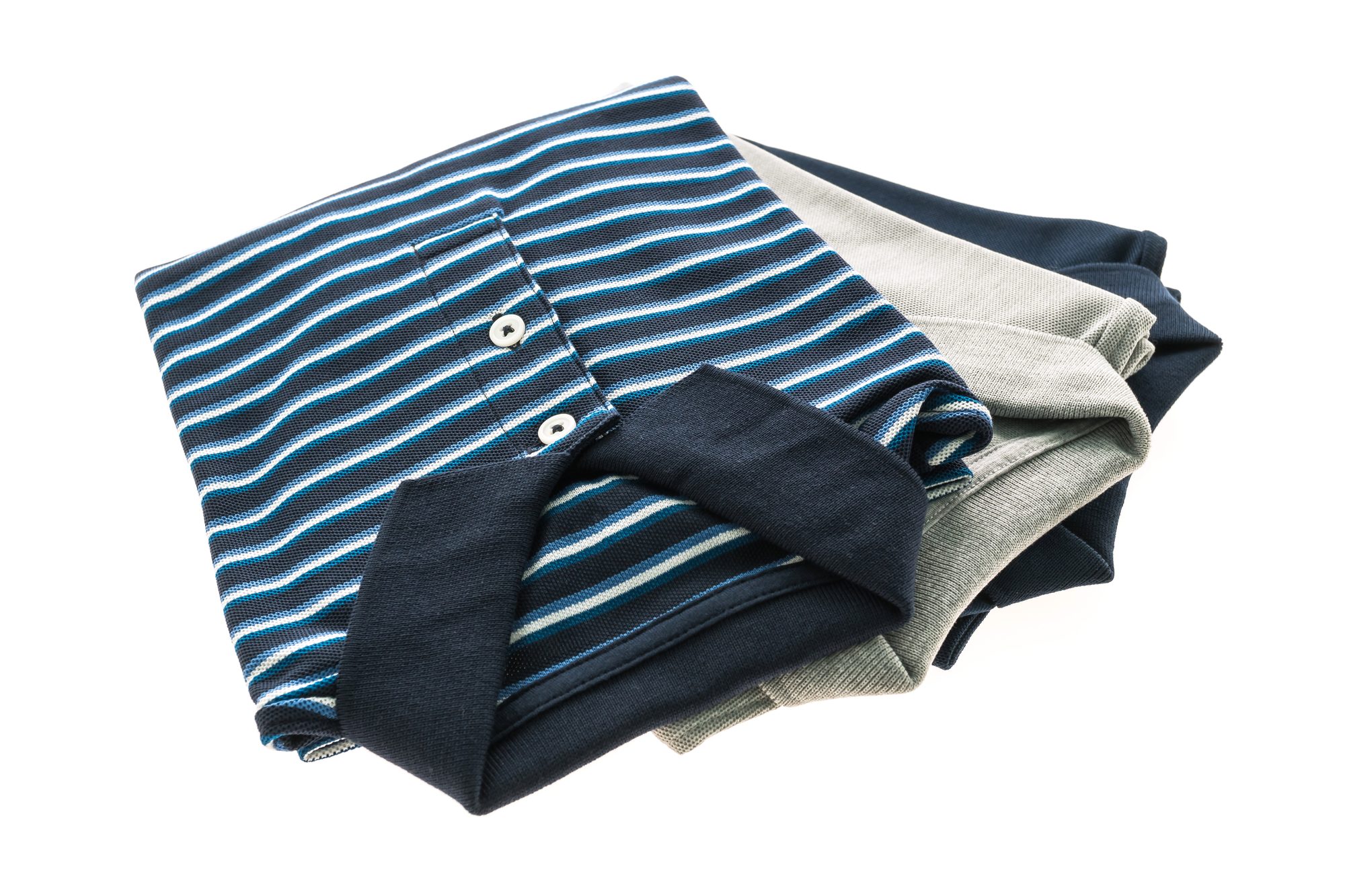
A workable branch portfolio usually spans layering and outer layers, which is where most of the visible brand identity sits: quarter-zip and full-zip sweaters, cardigans, soft shell jackets and blazer-weight layering pieces for staff who meet commercial clients. Underneath that sit the daily items, woven and dress shirts and polos, in both men’s and women’s fits. Accessories and bags round it out for staff who move between locations.
Decoration is doing more work here than in most sectors. A mark that reads well on a work jacket can look heavy on a fine-gauge cardigan, so placement and size are set per item rather than applied uniformly. Getting that right is the difference between a team that looks consistent and one that looks like it was handed the same shirt.
Appearance is part of the customer experience in retail banking, and staff who feel well dressed behave differently in front of a customer. That is the actual return on the spend, and it is the reason participation matters more than unit cost.
Brand Control Across Every Location
Financial institutions tend to have genuine brand standards, often written down and often enforced by somebody in marketing who will notice if the logo is the wrong blue. That makes them easier to work with than most, not harder, because the answers already exist.
One approved mark, applied once
Your logo is digitized into a stitch file and approved on a sewn sample. That file runs on every order after it, so a cap ordered this year matches a jacket ordered three years ago.
Thread and ink matched to your standard
Colors come from your branding guidelines rather than from whatever is nearest on the rack. If your brand book specifies a blue, that is the blue.
Mergers and rebrands handled cleanly
A new mark is digitized and the retired one is removed from the store, so nothing ships with a logo the institution has stopped using. This matters more in banking than in most sectors.
All of the decoration is done in our own building, which is the practical reason the standard holds. Details are on logo digitizing, embroidery and screen printing.
What It Costs and How It Gets Funded
to build your store
per employee per year to start
average per employee per year
items on a typical order
Building the store costs the institution nothing. What you spend is what your people order, and there is no contract, no minimum order size.
Most programs set a floor of at least $100 per employee per year, with the average landing at $200 or more, and a typical order runs to about four items. Billing is redemption based, so you are invoiced against what staff actually order rather than against the full credit pool.
The one thing that sinks a program
One thing worth knowing before you set the number. A store launched with no institutional subsidy at all disappoints every time, at any size. If staff are expected to fund everything themselves, participation stays low enough that the program never establishes itself, and it gets judged a failure for reasons that have nothing to do with the apparel. The employee dress code and apparel policy page covers how to set that properly.
Where This Fits
The other sectors we run programs for, and what changes between them.
The storefront branch staff order from, in their own sizes.
How events, sponsorships and recognition get funded.
The full managed program this sits inside.
Common Questions
Yes, and it should. One portfolio carries both, with daily apparel usually funded by an allowance and events and sponsorships drawing on a separate credit with its own budget and approver. Running them as two arrangements with two suppliers is how the branding drifts apart.
By removing ordering from the branches. Everyone orders from the same approved store, the logo comes from approved files applied the same way every time, and each order is made and shipped to the individual. No branch holds stock, so no branch runs out and improvises.
Yes, and for agricultural and community banks it is usually a primary category rather than an afterthought. Coats, rainwear, quarter-zip and full-zip layering and caps are all standard parts of a portfolio, carrying the same mark as the dress shirts.
The new mark is digitized and the retired one is removed from the store so nothing ships with a logo you have stopped using. Because stock is not held, there is also no inventory in the old branding to write off, which is a real saving in a merger.
No. There is no minimum on individual orders, including a single item for a single person. Production starts when the order is placed, so one new teller ordering one polo is a normal order.
Orders ship within 5 to 7 business days of being placed. For a sponsorship or community event, the practical constraint is usually how early the decision is made internally rather than production.
Nothing. Building the store costs the institution nothing, and there is no contract or annual commitment behind it. You are invoiced for what your people actually order.
Either is possible and a blend is common. What does not work is no institutional funding at all. Stores launched that way see participation low enough that the program never establishes itself, regardless of the size of the institution.
Yes. Eligibility and allowance levels are set per group, so branch staff, lenders and corporate roles can all carry different amounts and different approved categories within the same store.
More on how a program runs on the full FAQ page.
Talk Through Your Branch Network
Your institution name, roughly how many staff you have and how many locations. Our team will follow up to talk it through.