
Managed Employee Uniform Program
A uniform program your business decides and somebody else runs. Employees order what they need from an approved portfolio, each garment is made after it is ordered, and it ships to them. Nothing is rented, nothing is returned and nothing sits in a storage room.
Purchase, not rental
Employees own what they order.
Allowance per role
Different roles can carry different amounts.
Decorated in our shop
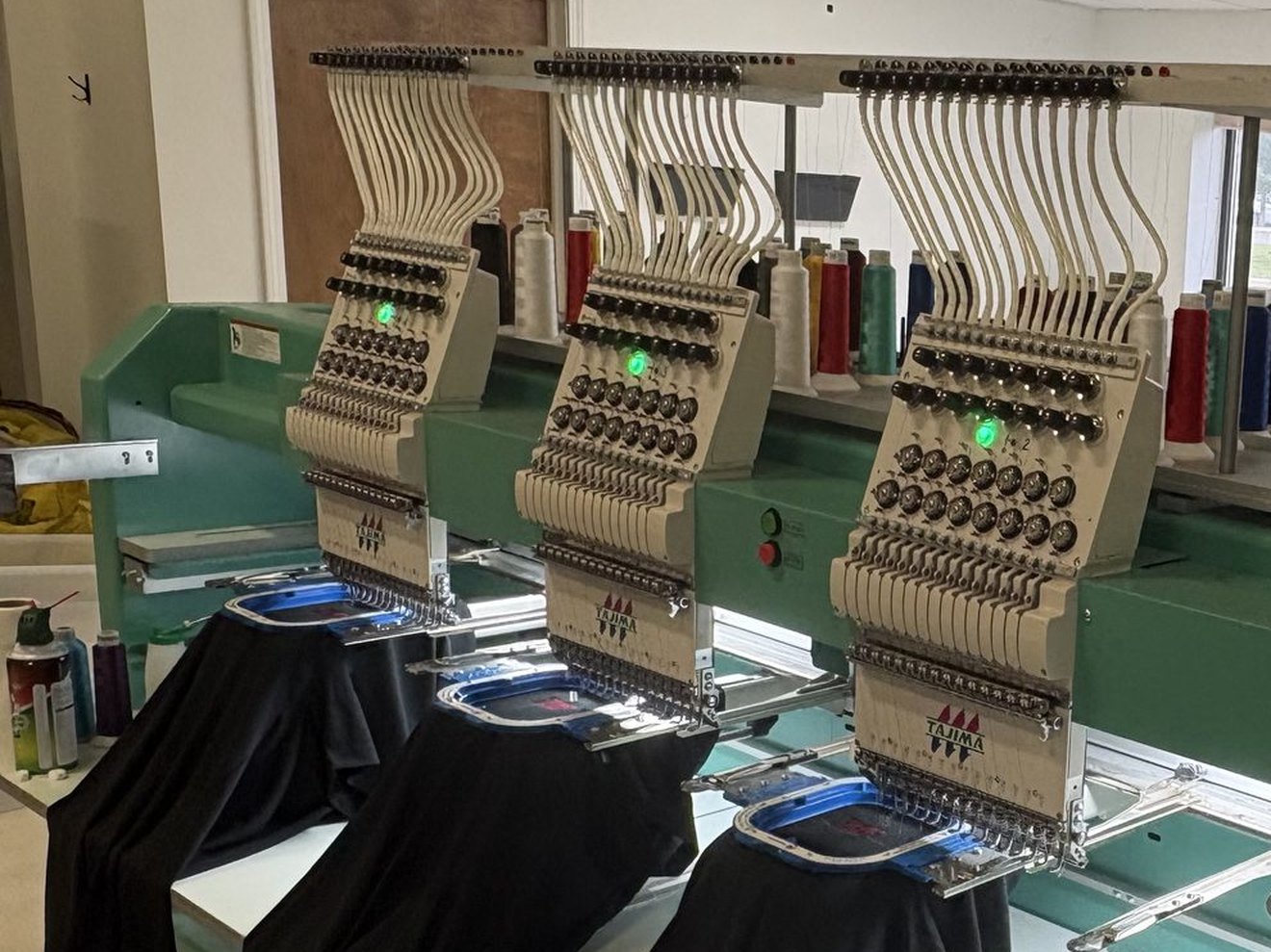
Embroidery and screen printing in house.
Ships to each employee
Packed individually, within 5 to 7 business days.
What a Managed Uniform Program Is
Most businesses arrive at uniforms the hard way. Somebody buys shirts for the shop floor, somebody else orders polos for the sales team a year later from a different supplier, and the logo is slightly wrong on both. Meanwhile a person whose actual job is something else has become the one everybody asks about sizes.
A managed program replaces that with one route and one owner. Your business sets what is offered, who can order it and what it funds. We source it, decorate it in our own shop, take the orders through online company store, and get each garment to the person who ordered it.
It is the same machinery as corporate apparel management, described in the vocabulary businesses with a shop floor actually use.
Purchase, Not Rental
This is the distinction worth being clear about, because the two models get filed under the same word and they behave nothing alike.
In a rental program you pay a recurring service fee, garments belong to the supplier, somebody collects and launders them, and you are usually committed for a term. It suits businesses that need industrial laundering and want the garments to stay out of employees’ hands.
Ours is direct purchase. Employees order garments and keep them. There is no weekly fee, no contract, no minimum order size and nobody arriving to swap anything. If the reason you want a uniform program is consistency and getting the work off somebody’s desk rather than laundering, purchase is usually the cheaper and simpler answer.
We will tell you plainly on the call if rental is the better fit for what you are describing.
Manufacturers weigh this comparison more often than anyone else. Corporate apparel for manufacturing and industrial companies goes through it alongside the production floor, office and field service split.
For a fuller comparison, including where rental still wins, see uniform rental vs purchase.
How a Uniform Allowance Works
Your business sets an amount per employee per year. We load it as a balance in the store and employees spend it on the approved portfolio in their own sizes.
You are invoiced against what is actually redeemed, not against the full pool you made available. An allowance nobody spends is not money you have already paid out. employee credit programs covers the mechanics, including gift balances and one-off loads for onboarding or recognition.
Set the amount
Your business sets an amount per employee per year.
Loaded as a balance
Employees spend it on the approved portfolio.
Invoiced on redemption
You pay for what is actually redeemed.
Different roles can carry different amounts. A field crew that goes through work shirts and a sales team that needs two good quarter-zips do not have the same requirement, and one store can carry both.
Our uniform allowance program page covers eligibility, amounts and billing in detail.
Writing the Policy Around It
You write that policy. What we can do is make it enforceable without anybody policing it, because the store only contains what your business approved. Dress code and branding guidelines stop being a document people have to consult and become the only thing available to order.
If your guidelines are strict, say so early. Businesses with several facilities, multiple logos and real brand standards are the ones this model was built for.
The questions every uniform policy answers
A uniform program is easier to run when the rules are written down once. The questions that come up are always the same: who is eligible, what the allowance covers, when it resets, whether employees can spend beyond it, and what is required rather than optional for a given role.
What the Portfolio Covers
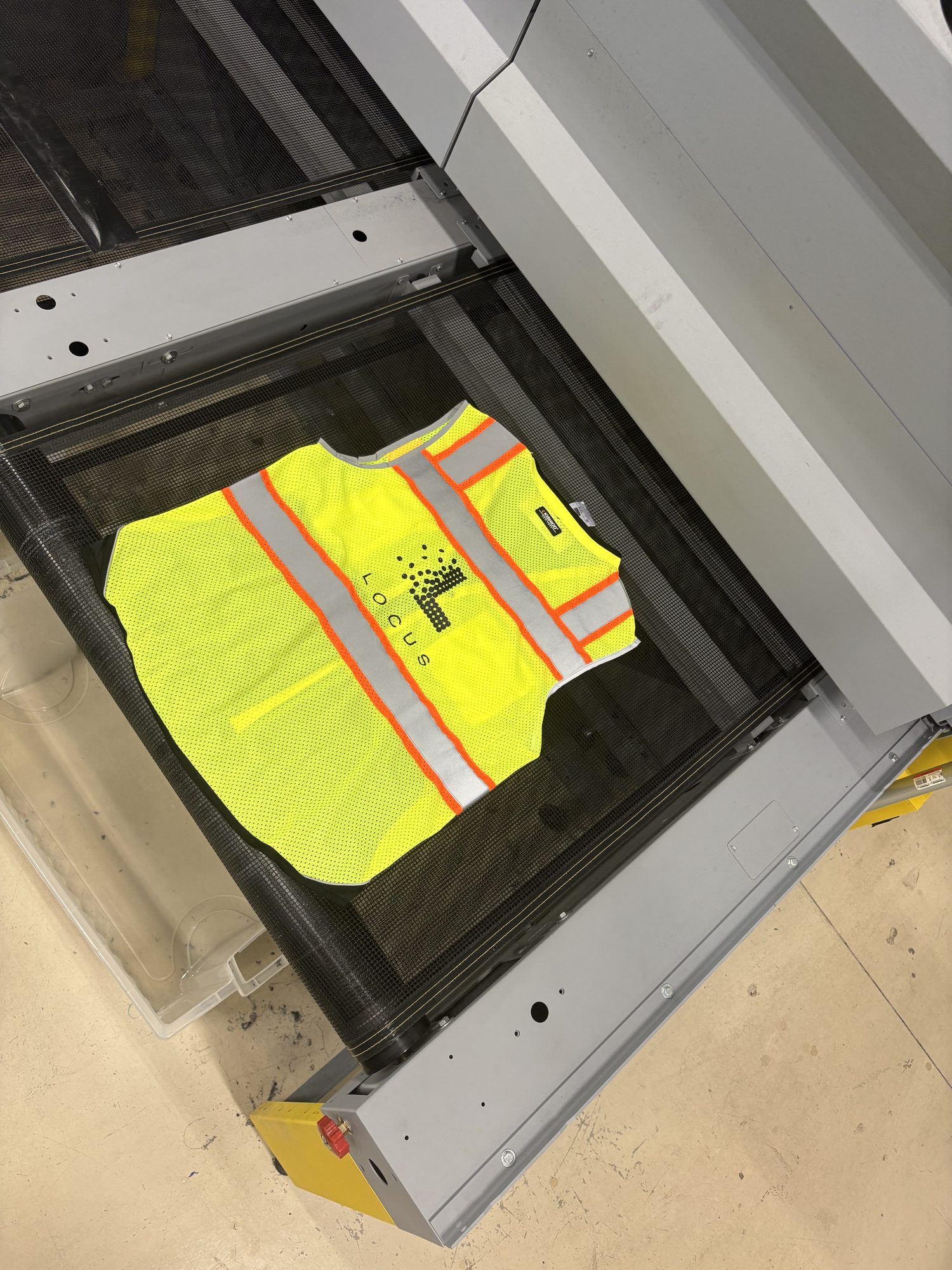
Embroidered polos, woven and dress shirts, quarter-zip and full-zip layering, coats and rainwear, caps and knit hats, bags and soft-sided coolers. Screen printed performance shirts, cotton tees and sweatshirts, safety vests and fitness pants. Workwear shirts, jackets, bibs and work pants. The full list of corporate apparel brands spans well known consumer labels and premium private label, in men’s and women’s fits.
Every item is made to order. When somebody places one it is produced, decorated in house, then packaged individually and shipped to that person’s home. Nothing arrives at your office to be sorted and handed out.
Which method goes on which garment is not a detail you have to manage. Logo digitizing, embroidery and screen printing all happen in our own building, so the mark on a field tech’s work shirt matches the one on an account manager’s quarter-zip.
Customer-facing networks need a wider spread again. Corporate apparel for banks and financial institutions covers how a branch network and a field lender draw on one portfolio.
Where This Fits
The full managed program this sits inside.
The storefront your employees order their uniforms from.
How a uniform allowance is funded and spent.
How each order is produced, packaged and shipped to the individual.
Common Questions
A program where one company owns the whole cycle: sourcing the garments, applying your logo, holding the store your employees order from, producing each order and shipping it to the person who placed it. Your business makes the decisions about what is offered and what it funds. Everything operational sits with us.
No. Nothing is rented, leased or returned. Your employees order garments they keep. There is no weekly service fee, no contract term, no minimum order size and nobody collecting laundry. If you are comparing us against a rental provider, that is the difference that matters most.
Your business decides an amount per employee per year and we load it as a balance in the store. Employees spend it on the approved portfolio. You are invoiced against what is actually redeemed rather than the full pool, so an unspent balance is not money you have already paid out.
It depends on the roles and what they need to wear, and we will talk through it on the discovery call rather than guess here. What we can say is that programs launched with no allowance behind them disappoint every time, whatever the headcount.
Yes. Industrial work shirts, flame resistant garments, high visibility items and heavy outerwear sit in the same portfolio as polos and dress shirts, which is what most businesses with both office and field staff actually need.
Yes, and most programs do exactly that. A common setup is one tier for client-facing and executive staff, a standard tier for general employees and a workwear tier for field and production roles, all inside one store.
New employees order on their first day rather than waiting for somebody to assemble a welcome package. When someone leaves, their access ends. Nothing needs collecting because nothing was rented.
No. Every garment is produced after it is ordered. There is no inventory behind the store, no minimum order size and nothing left over to write off after a rebrand.
How a store gets set up and funded is covered on the company store for employees page, and the rest sits on the apparel program FAQ.
Talk to Us About a Uniform Program
Tell us your company name, roughly how many employees you have, and which roles need covering. Our team will follow up to talk it through.